22 September
Blog
Hana Tech Launches the US–Libya Global Innovation Bridge Hackathon 2026: AI, Sustainability & Cross-Continental Student Collaboration
- Hana Tech Technical Writing Team
- Technology
- 0 Comments
September 14, 2026 · 1:00 PM EST / 7:00 PM Libya · Dual-Hub Live Stream
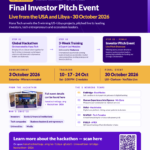
On September 14, 2026, Hana Technology launched the inaugural US–Libya Global Innovation Bridge Hackathon — a first-of-its-kind academic collaboration streamed live simultaneously from Clarkson University in Potsdam, New York and Libyan International University (LIMU) in Benghazi, Libya. Fully sponsored and executed by Hana Tech International Inc., the event united students, AI researchers, sustainability experts, UN officials, and Silicon Valley investors around one shared mission.
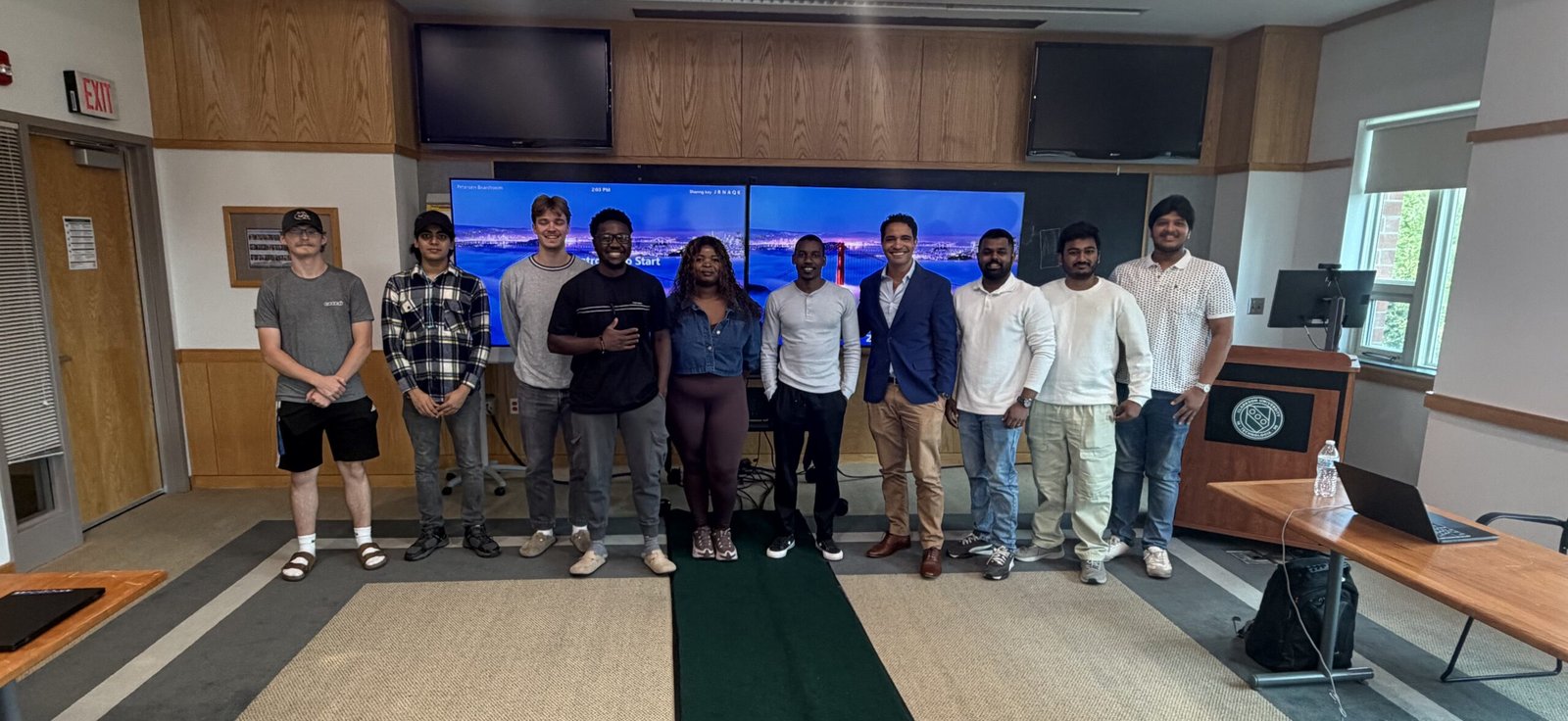
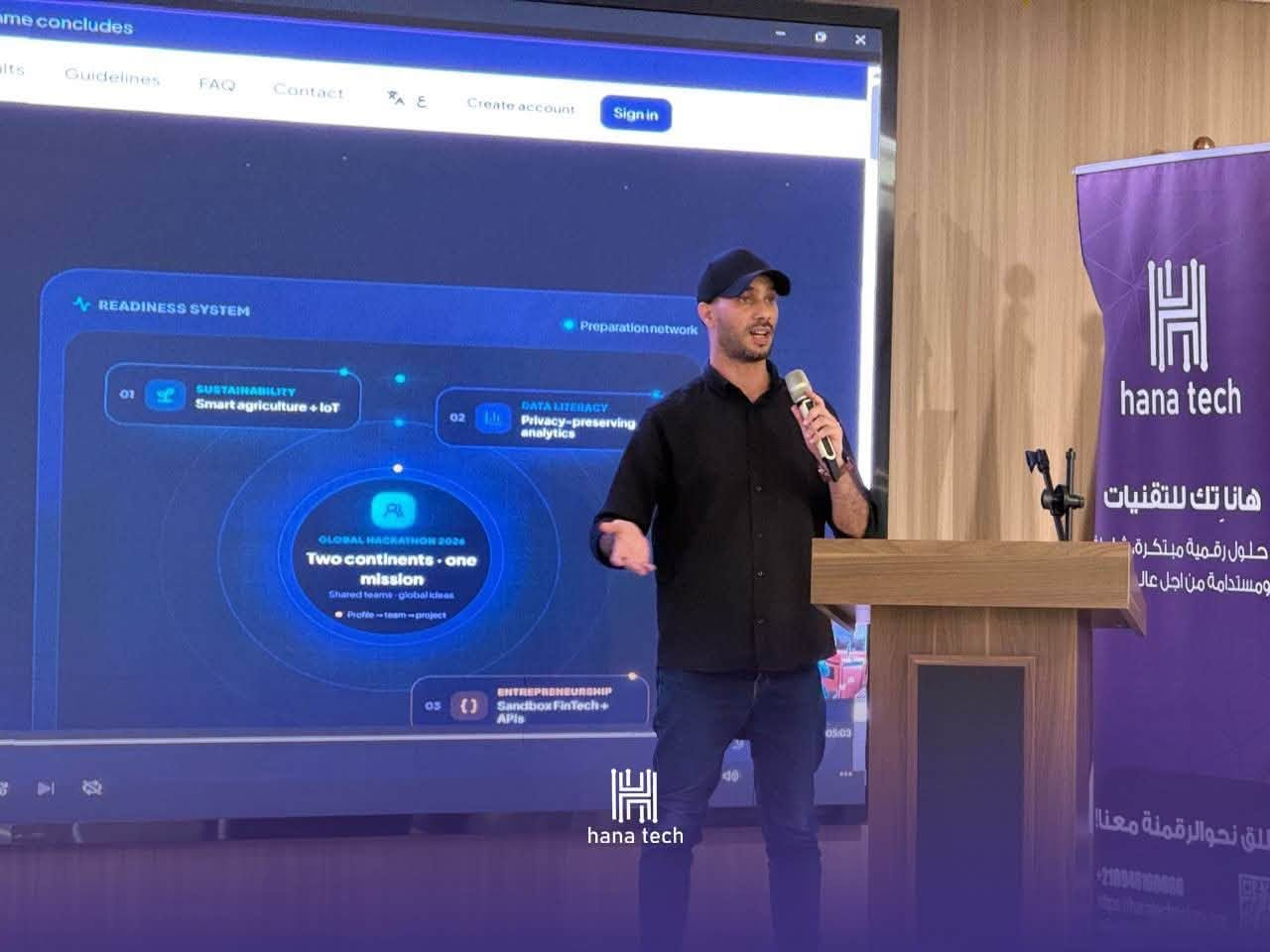
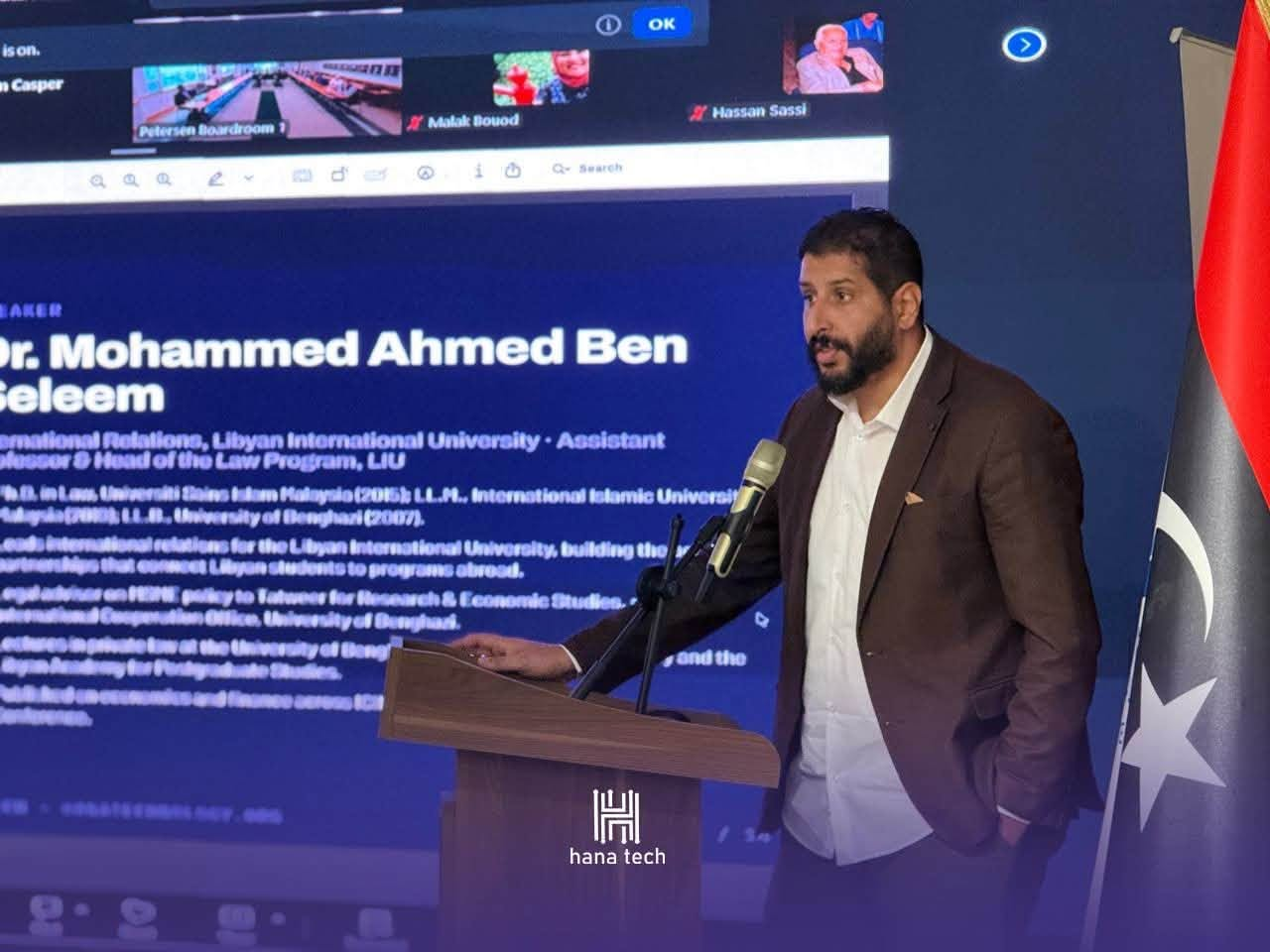
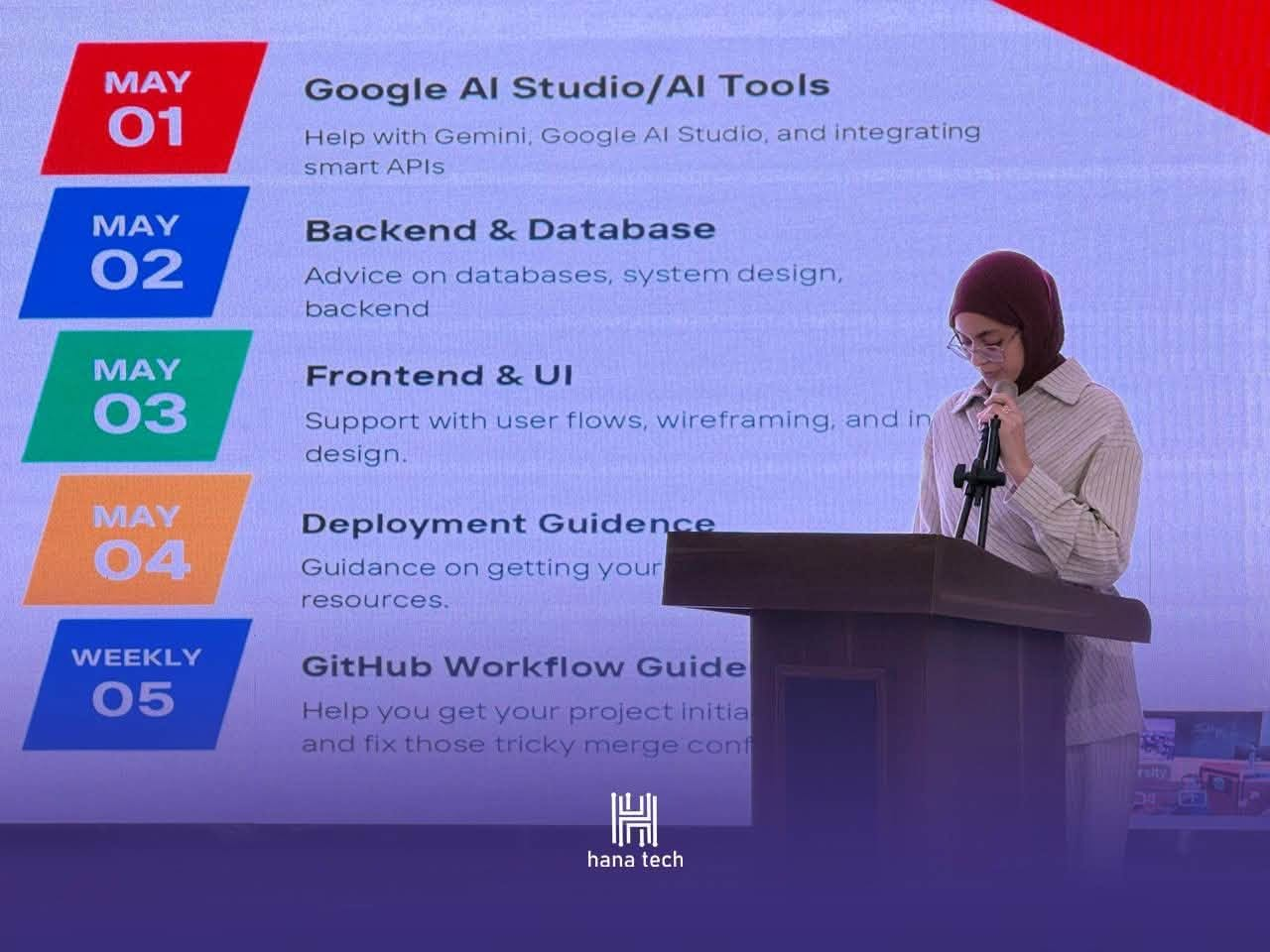
“Two Continents. One Mission. Limitless Possibilities.”
A free, in-person international hackathon — two live hubs, three challenge tracks, cross-continental student teams.
🎥
Full Event Recording — Watch Below
The complete live stream of the hackathon kickoff — including keynotes, track presentations, and all speaker remarks — is embedded in this article.
Watch the Full Event Recording
▶ Open full recording in Google Drive
Launch Ceremony at the Benghazi Hub — LIMU
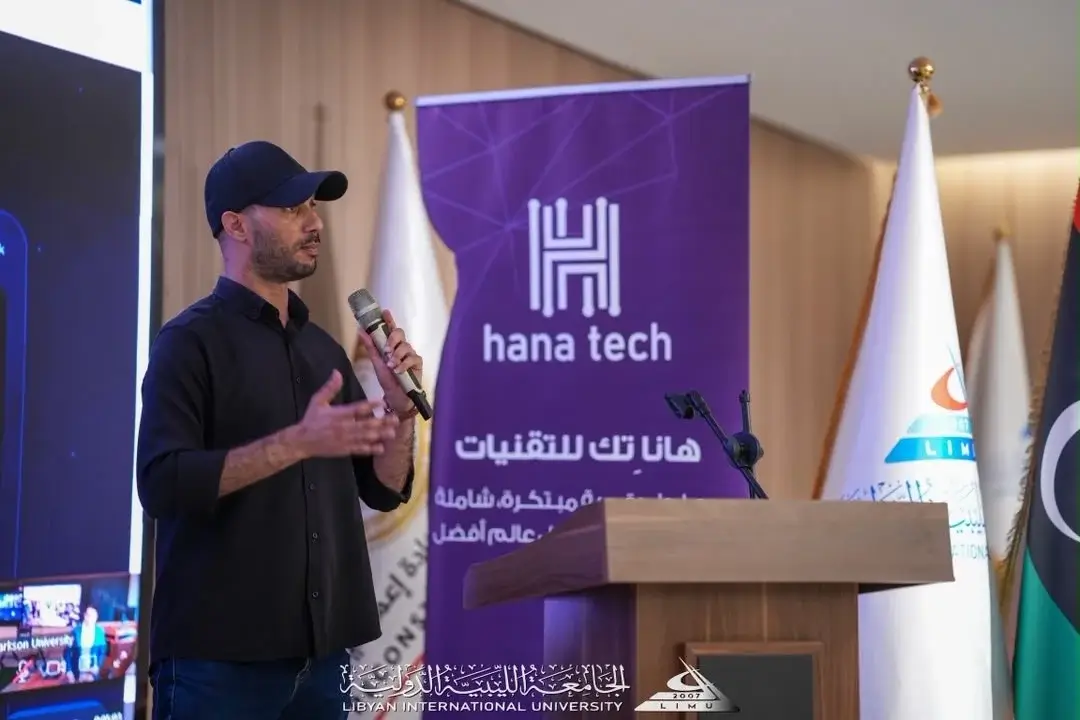
The Benghazi hub at Libyan International University (LIMU) opened with a full launch ceremony organized by the Google Developer Student Club at LIMU. Club lead Tasneem presented the club’s mentoring role, while Zubair Al-Oujli walked participants through developing AI-powered projects using a structured workflow. Khaled Al-Manfi, developer of the TeamHub hackathon platform (teamhub.ly), guided students through registration, track selection, and team formation on the platform. Manal, representing LIMU, delivered the official opening welcome and closed the launch ceremony.
Dr. Mohamed Ahmed bin Selim, Head of the Law Program at LIMU, drew on the experience of law students from the previous hackathon edition and spoke to the ethical and legal dimensions of AI. He encouraged students to keep experimenting despite real-world challenges — including power outages and fuel shortages — and emphasized that technology is a tool supporting human capability, not a replacement for it. He praised the initiative for showcasing the capabilities of Libyan youth and building bridges with peers worldwide.
In his keynote, Dr. Stephen Casper from Clarkson University introduced the TRAIL framework — a methodology for documenting AI contributions alongside human decisions in project development — encouraging teams to test, review, and exchange knowledge as they build their solutions.
Malak Bououd presented details on the Venture Hub, currently under development in Ireland, which aims to support the transition of ideas into viable, scalable ventures — with plans to connect it to the Hana Tech Hub in Benghazi to bridge entrepreneurs with expertise, resources, and global markets.
Top-performing projects from the hackathon were highlighted as candidates for future funding and incubation opportunities — a signal that this competition was designed not just as a learning exercise, but as a launchpad for real innovation.
The Two Live Hubs
🇺🇸
Hub 01 — New York, USA
Clarkson University, Potsdam, NY
🇱🇾
Hub 02 — Benghazi, Libya
Libyan International University (LIMU), Benghazi
For the first time ever, visionaries, developers, and creators from New York and Libya joined forces in real time. Cross-continental teams collaborated live to build high-impact solutions for their shared future — with winner projects selected for future funding and incubation.
The Platform Behind the Initiative — TeamHub
🔗
Built by the LIMU AI Team
TeamHub — teamhub.ly
TeamHub is the dedicated hackathon management platform built specifically for this initiative by Khaled Al-Manfi and the AI team at Libyan International University (LIMU). The platform handles participant registration, track selection, and team formation — and was designed from the ground up to scale this initiative as it grows, welcoming more great minds and expanding the program to new universities, cities, and countries.
Join the platform at teamhub.ly →
As this initiative expands, TeamHub will serve as the central infrastructure for managing cross-continental collaboration — connecting students, mentors, and judges across future editions of the hackathon and enabling Hana Tech to scale this program to more universities, more tracks, and more participants globally.
Three Innovation Tracks
🌱
Track 01: SustainabilitySmart Agriculture & Applied IoT
Combat climate change using smart technology. Students design low-cost IoT irrigation systems using ESP32 microcontrollers and soil sensors at a real Benghazi agricultural test site — engineering solutions that optimize water resources and drive long-term sustainability.
📊
Track 02: Data LiteracyPrivacy-Preserving Data Analytics
Turn data into community impact while protecting user privacy. Teams build ethical data visualization and analytics systems using anonymized, open datasets — full IRB-compliant framework — teaching responsible data architecture for civic and social challenges.
💳
Track 03: EntrepreneurshipSandbox FinTech / API Literacy
Connect local financial platforms with global software standards. Teams design secure API architecture, system interoperability, and FinTech logic through simulated sandbox environments — building the tools for modern, scalable financial technology.
Rather than building proprietary commercial systems, teams created open-source educational prototypes and documentation connected to real regional challenges — ensuring lasting value beyond the competition.
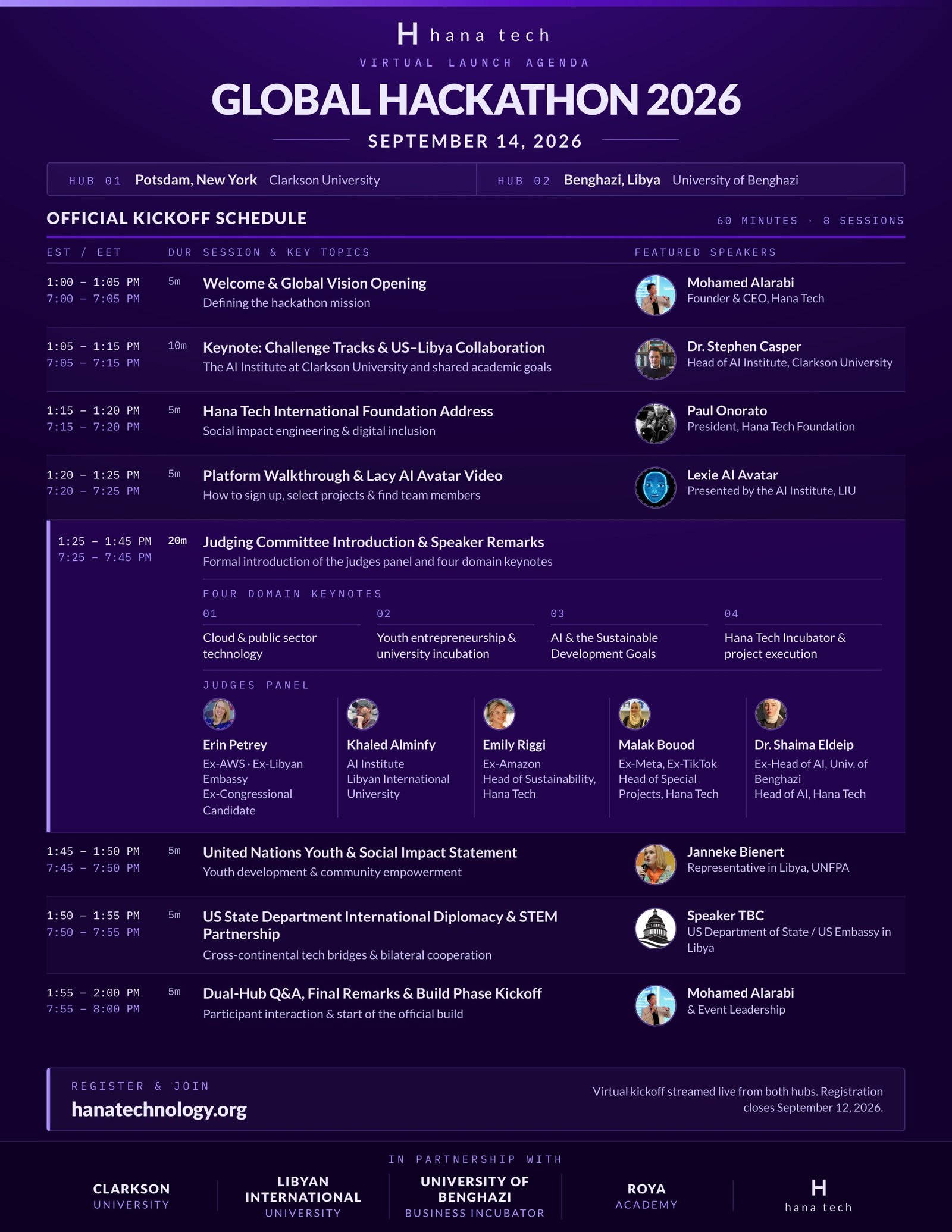
Official Kickoff Schedule
Message from the United Nations: UNFPA Libya
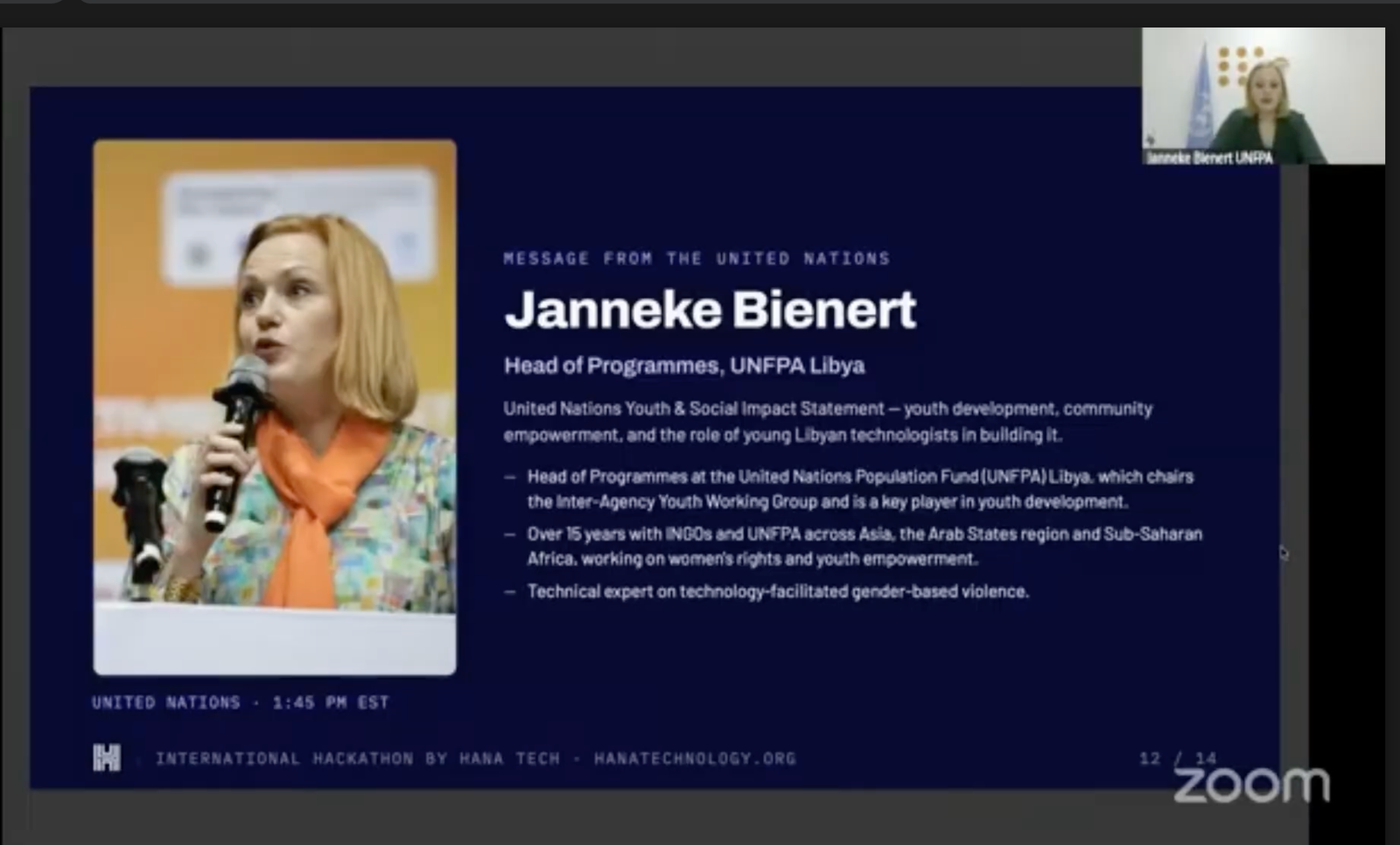
Janneke Bienert, Head of Programmes at the UN Population Fund (UNFPA) Libya, delivered an official United Nations message addressing students on youth development, community empowerment, and the role of young Libyan technologists in building Libya’s future. With over 15 years of experience with INGOs and UNFPA across Asia, the Arab States, and Sub-Saharan Africa, and as a technical expert on technology-facilitated gender-based violence, her presence confirmed the UN’s recognition of this hackathon as a meaningful vehicle for positive social change.
Expert Judges Panel
Dr. Shaima Eldeip
Head of AI, Hana Tech · Former Head of AI Institute, University of Benghazi
Head of AI, Hana Tech · Former Head of AI Institute, University of Benghazi
Leads Hana Tech’s AI practice connecting applied research to products for the Global South. Currently pursuing her PhD in Kuala Lumpur, Malaysia. Anchored the academic side of Hub 02, mentoring Benghazi teams across all three tracks.
Erin Petrey
Ex-AWS · Former Board Member, National Council on US–Libya Relations
Ex-AWS · Former Board Member, National Council on US–Libya Relations
Amazon Web Services veteran driving innovation across global policy, technology and social impact. Former Congressional candidate, dedicated US–Libya diplomacy expert, and leading voice on Sustainable AI and green technology.
Emily Riggi
Head of Sustainability, Hana Tech · Ex-Amazon
Head of Sustainability, Hana Tech · Ex-Amazon
Former Amazon Devices sustainability leader. CleanTech patent holder. Led one of the world’s largest federal government energy-saving programs in Japan. M.S. in Engineering & Management, Clarkson University.
Malak Bououd
Head of Special Projects, Hana Tech · Ex-Meta, Ex-TikTok
Head of Special Projects, Hana Tech · Ex-Meta, Ex-TikTok
Quality operations expertise from TikTok and Meta. Former Project Coordinator at SPARK NGO. Founder of the Idea-to-Venture Hub. Judging focus: platform quality, business scalability and pitch readiness.
Dr. Stephen E. Casper
Head of AI Institute, Clarkson University
Head of AI Institute, Clarkson University
Delivered the keynote on Challenge Tracks & US–Libya Collaboration. PhD, History of Medicine (UCL). Expert at the intersection of AI, neuroscience, and Science-Technology-Society policy.
Khaled Al-Manfi
AI Institute, Libyan International University (LIMU)
AI Institute, Libyan International University (LIMU)
Representing the AI research community at LIMU, bringing academic expertise in artificial intelligence and applied technology to evaluate cross-continental student projects.
Program Timeline
| Date | Milestone |
|---|---|
| Sept 14 | Virtual Kickoff & Media Launch — live stream connecting Clarkson University and Libyan teams |
| Sept 14–18 | Collaborative Build Phase — cross-continental teams work on shared platforms (minimum 8 joint hours) |
| Sept 18 | Submission Deadline — open-source artifacts, slide decks, and documentation finalized |
| Sept 18 | Final Project Pitch Session — live presentations to the distinguished judges panel |
| Sept 21 | 🏆 Awards Ceremony — official announcement of winners and prizes by Hana Tech |
Participating Institutions & Partners
The hackathon was made possible through the collaboration of five institutions united by a shared commitment to education, innovation, and the future of Libya’s technology ecosystem:
- Clarkson University — Potsdam, New York, USA
- Libyan International University (LIMU) — Benghazi, Libya
- University of Benghazi Business Incubator
- Roya Academy for Leadership and Technology
- Hana Technology International Inc. — Sponsor, Organizer & Innovation Platform
📰 As Featured On — LIMU Official Coverage
Libyan International University — Official News
Hana Tech and LIMU Launch the 2026 Transcontinental Global Hackathon
A Libyan-American collaboration uniting young talent to develop solutions in smart agriculture, data analysis, and financial technology — as covered by LIMU’s official news team.
Read the full story on limu.edu.ly →
Hana Technology — Bridging Libya to the World
AI · Sustainability · Academic Collaboration · Innovation
Learn More About Hana Tech →Related Posts